MDR market today
0
Rough global MDR size as of 2025 — industry estimates put it in the $4–6B range.
Utopick IT runs the security operations your team can't staff around the clock — real-time detection, automated containment, and the evidence trail your board, cyber-insurer, and regulator will ask for. The retainer covers the standing team; per-event fees track attacks blocked, vulnerabilities surfaced, and incidents contained.
Security stopped being a line-item cost long ago; today it's the permission slip for running anything digital. Inside that market, Managed Detection & Response (MDR) is the slice Utopick IT focuses on, and it’s the one growing fastest.
Rough global MDR size as of 2025 — industry estimates put it in the $4–6B range.
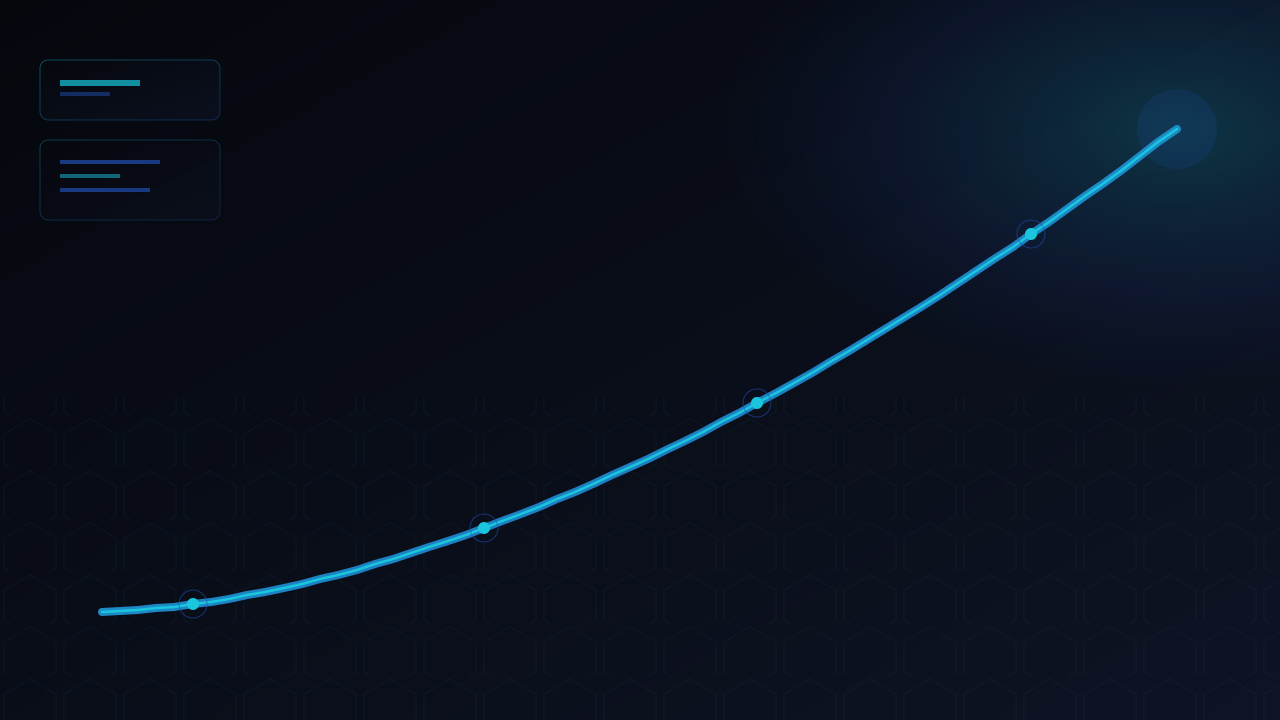
Where the curve points — pushed up by AI-enabled attackers, cloud sprawl, and tightening regulation.
Expected yearly CAGR across MDR — one of the steepest growth curves anywhere in tech.
For boards the question shifted from if a breach happens to when. With cybercrime losses already in the hundreds of billions and heading toward trillions, finance chiefs are approving defensive spend to match.
The market is walking away from static software licenses and toward performance-based protection — money spent on prevention you can measure, not tools that sit idle. That is precisely the lane Utopick IT runs in.
Eight overlapping classes of attack — each one expanding in reach, speed, and AI-driven cunning.
Locked-up systems, double-extortion plays, supply-chain footholds.
Machine-driven recon, deepfake social engineering, model manipulation.
Bulk PII theft and compromise of customer record stores.
Mis-set workloads, stolen tokens, movement across the estate.
Harvested credentials, MFA fatigue, hijacked accounts.
Rigged payments, business-email compromise, tampered transactions.
Edge exploits, dug-in persistence, command-and-control channels.
Knocking out the services people rely on every day.
Utopick IT works inside the fast-growing field of cyber protection and attack response, putting advanced security technology to work to detect, respond, and prevent as events unfold.
“This vision rides the strongest current in cyber: AI-driven automated protection paired with response that happens in real time.”
A base retainer keeps the team on call. Per-event fees follow the work actually done — intrusions blocked, vulnerabilities patched, incidents contained. Caps are agreed up front so a noisy month never blows up the budget.
The retainer pays for analyst hours; per-event fees move with real threat volume, not with how many seats you license.
Our fee climbs when our work prevents a loss — never simply because your team got bigger.
When the controls never trigger, there’s nothing to pay for. In practice they trigger almost every month.
Staffing a 24/7 SOC properly takes 8–12 analysts. We carry that headcount; you carry one retainer line.
Each billable event drops cleanly into a board-pack line — prevented, contained, surfaced, remediated.
Swap 3–5 separate tools (SIEM, EDR, vuln scanner, phishing gate, IR retainer) for one team that runs them all and owns the call.
One detection-and-response layer covering the surfaces your revenue actually depends on.
The CISO inherited a 24/7 detection function staffed by 3 generalist engineers, an alert backlog above 2,400/week, and a board demanding sub-15-minute response on critical incidents. Their existing SIEM and EDR licences had 18 months left; replacing them was not an option.
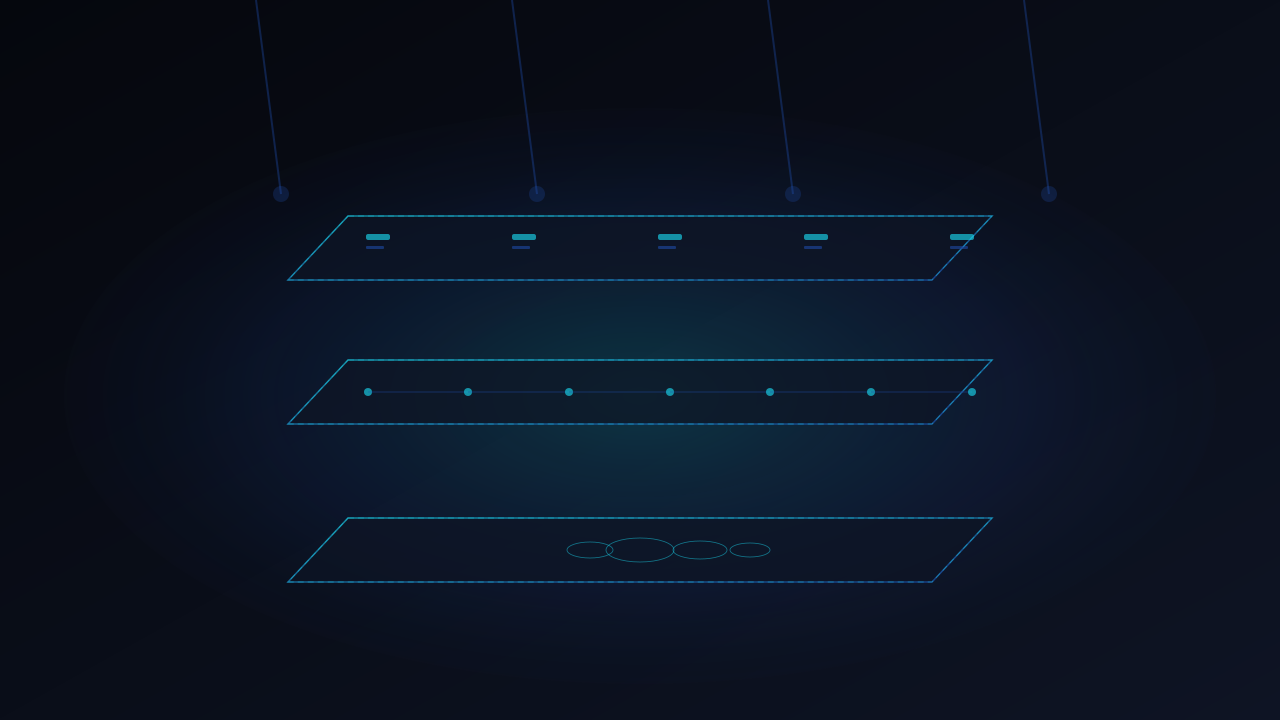
Each customer session passes through five layers working in concert, all in under two seconds. Every layer emits a measurable defensive event — and those delivered outcomes are exactly what the per-event fee is billed against.
Establish who sits on the far end of each session.
Judge, in real time, whether the behavior is genuine.
Stop the payload right at the application’s front door.
Check whether the source is already flagged as hostile.
Your team's case workspace — and where our hours and your per-event fees get squared up each month.
Attackers lean on AI to automate break-ins, phishing, and code exploits.
Each new workload stretches the attack surface — defense has to grow with it.
Governments everywhere keep tightening the rules on cyber and data protection.
Skilled defenders are hard to find — so managed detection becomes a structural buy.
Boards now expect response in seconds to minutes — not hours, not days.
Note. Scope, deliverables, timelines, and SLA tiers are agreed in a mutual Statement of Work. Commitments on this page are illustrative; binding terms live in the engagement contract.
Managed cybersecurity — we design, stand up, and run detection, response, and attack-mitigation programs around the clock for service websites, e-commerce platforms, customer databases, and digital infrastructure. You get the people, the tooling, and a full evidence trail.
The base retainer keeps the team on standby. The variable part bills against results you can measure — threats blocked, time-to-respond, vulnerabilities closed. Procurement gets predictability; you get incentives that point the same way as yours.
Work starts from USD 10,000 for a focused assessment. Pricing for projects, managed service, and multi-year retainers is quoted once the engagement scope is signed.
CISOs at companies of any kind — mid-market and lower-enterprise, where the in-house security team is thin or stretched. Our core offerings are Managed Detection & Response (MDR), an incident-response retainer, vulnerability management, and security-engineering staff augmentation.
We commit to measurable gains against your baseline, quantified per engagement in the Statement of Work. Absolute outcome guarantees are vendor fiction — instead we put SLA-backed commitments and clear remedies in writing.
Scoping call within 2 business days. A signed Statement of Work usually follows in 7–14 days. Monitoring goes live within 30 days of SOW on standard engagements; an emergency incident-response retainer can be switched on within 24 hours.
Most of the work is done by analysts and engineers we employ directly. When a vertical calls for specialist coverage (forensics, firmware analysis, jurisdiction-specific filings), the named partners are disclosed in the SOW before you sign — never quietly white-labelled.
We integrate with your existing stack instead of replacing it. Our team runs the operating layer on top of the tools you've already paid for — tuning them, staffing the SOC against them, and owning the verdict and evidence chain. If a tool is genuinely failing, we put that in writing.
Region-specific options — EU, UK, US, Israel, GCC — are decided per engagement. A BAA (US healthcare), DPA (EU), and ISO 27001-aligned controls are issued under the engagement contract. Production data and PII never leave your designated region without written consent.
After the first scoping call, under mutual NDA. Most of our clients are regulated and can't be named publicly. We arrange reference calls with comparable-size buyers in your vertical before the SOW is signed.